
Last Updated: May 19, 2025
As a Non-Resident Nepali (NRN) living abroad, managing legal matters back home in Nepal can be challenging. Whether you’re contemplating divorce proceedings or need to transfer property while residing outside Nepal, understanding how to effectively use a Power of Attorney (PoA) is crucial. This comprehensive guide walks you through the entire process, costs, and legal requirements to ensure your affairs are handled properly despite your absence.
Table of Contents
- Understanding Power of Attorney in Nepal
- Types of Power of Attorney Relevant for NRNs
- Using Power of Attorney for Divorce Proceedings
- Using Power of Attorney for Property Transfers
- Step-by-Step Process for Creating a Valid Power of Attorney
- Cost Breakdown for Power of Attorney, Divorce, and Property Transfer
- Special Considerations for NRNs
- Frequently Asked Questions
- Legal Resources and Assistance
Understanding Power of Attorney in Nepal
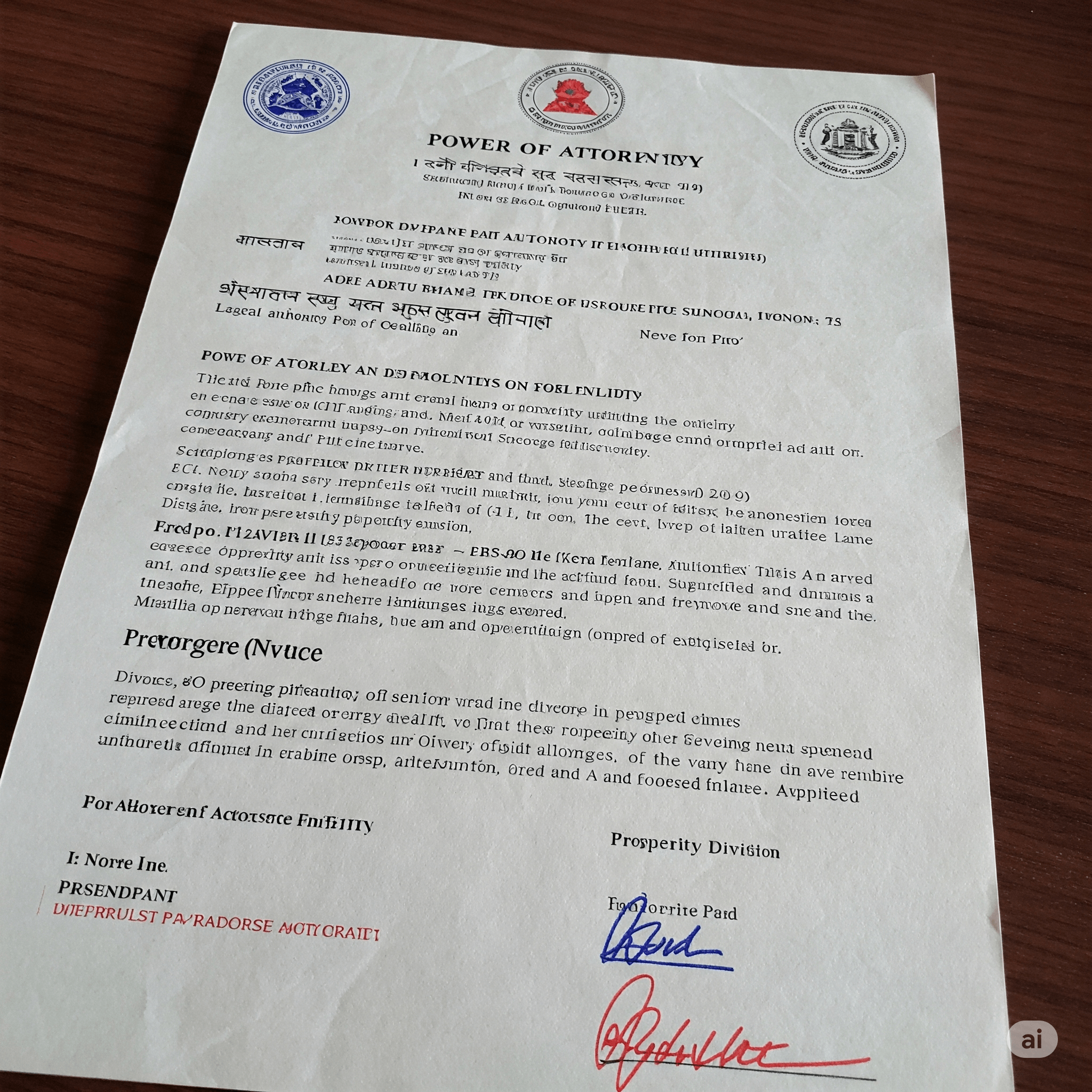
A Power of Attorney (PoA) is a legal document that authorizes another person (known as an “attorney-in-fact” or “agent”) to act on your behalf in legal and financial matters. In Nepali legal terminology, it’s commonly referred to as अधिकृत वारिस्नामा.
For NRNs, a PoA is particularly valuable as it eliminates the need for your physical presence in Nepal for various legal proceedings, including divorce and property transactions.
Legal Basis in Nepali Law
The concept of Power of Attorney in Nepal is governed primarily by:
- The Contract Act, 2056 (2000)
- The Nepal Agency Act, 2014
- Civil Code, 2074 (2017)
These laws recognize and enforce the legal authority granted through a properly executed Power of Attorney document.
Types of Power of Attorney Relevant for NRNs
1. General Power of Attorney
A General Power of Attorney grants broad authority to your representative to handle multiple matters on your behalf. This includes managing bank accounts, filing documents, representing you in court proceedings, and handling property matters.
Best for: NRNs who need comprehensive coverage for multiple legal and financial matters in Nepal.
2. Special Power of Attorney
A Special Power of Attorney limits your representative’s authority to specific tasks or transactions that you explicitly outline in the document.
Best for: NRNs who need representation for a specific purpose, such as solely for divorce proceedings or a particular property transaction.
3. Durable Power of Attorney
A Durable Power of Attorney remains valid even if you become mentally incapacitated.
Best for: Long-term planning and protection of your interests in Nepal, especially for elderly NRNs.
Using Power of Attorney for Divorce Proceedings
Legal Framework for Divorce in Nepal
Divorce in Nepal is governed by the National Civil (Code) Act, 2074 (2017), which replaced the previous Country Code (Muluki Ain). For NRNs seeking divorce through a Power of Attorney, understanding this framework is essential.
Can You Divorce Through Power of Attorney?
Yes, you can initiate and complete divorce proceedings in Nepal through a properly executed Power of Attorney. However, there are certain limitations and requirements:
- Court Appearances: While your representative can file paperwork and attend most hearings, some courts may require your personal appearance for specific hearings or to provide testimony.
- Mutual Consent vs. Contested Divorce: Divorce by mutual consent is significantly easier to handle through a PoA than contested divorces, which may occasionally require your presence.
- Child Custody Matters: Cases involving child custody disputes are complex and may require your personal participation at some point in the proceedings.
Step-by-Step Process for Divorce Through PoA
- Create a Special Power of Attorney specifically for divorce proceedings, clearly outlining the authority granted to your representative.
- Authenticate the PoA at the Nepali Embassy or Consulate in your country of residence.
- File the divorce petition through your representative at the District Court with jurisdiction over your last place of residence in Nepal.
- Provide required documentation including:
- Marriage certificate
- Citizenship certificates of both parties
- Evidence supporting grounds for divorce (if contested)
- Property details (if property division is involved)
- Court proceedings and hearings will be attended by your representative as outlined in the PoA.
- Finalization of divorce upon court decision, typically within 6-18 months depending on case complexity.
Using Power of Attorney for Property Transfers
Types of Property Transfers Possible Through PoA
Through a properly executed Power of Attorney, an NRN can authorize a representative to handle:
- Sale of property (land, house, apartment)
- Purchase of property
- Gift deeds (Dasboksh Patra)
- Inheritance transfers
- Mortgage and loan processes related to property
Legal Requirements for Property Transfer PoA
For property transfers, your Power of Attorney document must:
- Specifically identify the property with details such as plot number, area, location, and boundaries.
- Clearly state the authorized actions (sell, purchase, transfer, etc.).
- Include specific language required by the Land Revenue Office (Malpot Karyalaya).
- Be notarized and authenticated by the Nepali diplomatic mission in your country of residence.
Step-by-Step Process for Property Transfer Through PoA
- Draft a comprehensive Power of Attorney document with guidance from a qualified Nepali lawyer.
- Get the PoA authenticated at the Nepali Embassy or Consulate in your country.
- Register the PoA in Nepal at:
- The relevant District Court
- The Land Revenue Office (if handling land/property matters)
- Property assessment and valuation will be conducted to determine applicable taxes and fees.
- Payment of taxes and fees must be arranged before transfer can proceed.
- Documentation submission at the Land Revenue Office, including:
- Original title deed (Lalpurja)
- Tax clearance certificates
- Citizenship certificates
- Relationship proof (for inheritance)
- Current photographs
- Transfer deed execution by your representative at the Land Revenue Office.
- Receipt of new ownership documents after processing.
Step-by-Step Process for Creating a Valid Power of Attorney
1. Drafting the Power of Attorney Document
The Power of Attorney document should be drafted in both Nepali and English to ensure clarity and proper legal execution. It must include:
- Your full legal name and current overseas address
- Your attorney-in-fact’s full legal name and address in Nepal
- Clear description of granted powers (general or specific)
- Property details (if applicable)
- Expiration date or conditions (if any)
- Revocation provisions
2. Authentication Process for NRNs
For a Power of Attorney created outside Nepal to be valid within Nepal, it must undergo proper authentication:
a) Country with Apostille Convention:
If you reside in a country that is part of the Hague Apostille Convention:
- Have the document notarized by a local notary public
- Obtain Apostille certification from the designated authority in your country
- Submit the document to the Nepali Embassy/Consulate for further verification
b) Country without Apostille Convention:
- Have the document notarized by a local notary public
- Authenticate the document with your country’s Foreign Affairs Department
- Submit the document to the Nepali Embassy/Consulate for verification and authentication
3. Registration in Nepal
Once authenticated, your representative must register the PoA in Nepal:
- District Court Registration: All Powers of Attorney must be registered at the District Court with jurisdiction over the area where the power will be exercised.
- Additional Registration: Depending on the purpose:
- For property matters: Land Revenue Office (Malpot Karyalaya)
- For business matters: Company Registrar’s Office
- For court proceedings: The specific court where the case is being heard
4. Renewal and Revocation
- Validity Period: A Power of Attorney in Nepal typically remains valid for either the specified period in the document or the statutory maximum of 5 years.
- Renewal Process: To renew a PoA, you must either create a new document or explicitly extend the existing one through an addendum, following the same authentication process.
- Revocation: To revoke a Power of Attorney, you must:
- Create a formal revocation document
- Authenticate it through the same process as the original PoA
- Register the revocation at all places where the original PoA was registered
- Notify relevant third parties who may have relied on the original PoA
Cost Breakdown for Power of Attorney, Divorce, and Property Transfer
Power of Attorney Creation and Authentication Costs
| Process | Cost Range (NPR) | Cost Range (USD) |
| Drafting by lawyer in Nepal | 5,000-15,000 | $40-120 |
| Notarization in foreign country | Varies by country | $50-200 |
| Nepali Embassy authentication | 5,000-10,000 | $40-80 |
| Registration at District Court | 3,000-5,000 | $25-40 |
| Registration at Land Revenue Office | 1,000-3,000 | $8-25 |
| Total approximate cost | 14,000-33,000 | $115-465 |
Divorce Proceeding Costs
| Process | Cost Range (NPR) | Cost Range (USD) |
| Court filing fees | 5,000-10,000 | $40-80 |
| Lawyer fees (simple case) | 30,000-70,000 | $250-560 |
| Lawyer fees (complex case) | 100,000-300,000+ | $800-2,400+ |
| Documentation and administrative costs | 10,000-20,000 | $80-160 |
| Translation of foreign documents (if needed) | 5,000-15,000 | $40-120 |
| Total approximate cost (simple case) | 50,000-115,000 | $410-920 |
| Total approximate cost (complex case) | 120,000-345,000+ | $960-2,760+ |
Property Transfer Costs
| Process | Cost Range (NPR) | Cost Range (USD) |
| Government registration fee | 5-8% of property valuation | Varies |
| Capital gains tax (if applicable) | 2.5-5% of profit | Varies |
| Land Revenue Office processing fees | 5,000-15,000 | $40-120 |
| Lawyer/consultant fees | 30,000-100,000 | $250-800 |
| Local government taxes | 2-4% of property value | Varies |
| Documentation and administrative costs | 10,000-20,000 | $80-160 |
Note: These costs are approximations as of May 2025 and may vary based on location, property value, case complexity, and other factors. Exchange rate used: 1 USD = 125 NPR (approximate).
Special Considerations for NRNs
NRN Status and Documentation
Non-Resident Nepalis should maintain:
- NRN Card: Obtain and renew your Non-Resident Nepali Association (NRNA) membership card
- Updated Citizenship Records: Ensure your citizenship documents are current
- Tax Compliance: Maintain tax compliance in Nepal, especially for property you own
Cross-Border Legal Issues
Be aware of potential cross-border legal complications:
- Property Ownership Limitations: Some categories of land in Nepal have restrictions on foreign ownership
- Tax Implications: Property transactions may have tax implications both in Nepal and your country of residence
- Recognition of Divorce: Ensure divorce proceedings initiated in Nepal will be recognized in your country of residence, or vice versa
Choosing the Right Representative
When selecting someone to act as your attorney-in-fact:
- Trust and Reliability: Choose someone you trust implicitly, preferably a close family member
- Competence: Ensure they understand legal procedures or can work effectively with lawyers
- Availability: They must be available to attend meetings, court dates, and office visits
- Communication: Select someone who will keep you informed throughout the process
Frequently Asked Questions
General Power of Attorney Questions
Q: How long is a Power of Attorney valid in Nepal?
A: Unless specified otherwise in the document, a Power of Attorney in Nepal is valid for up to 5 years. After this period, it must be renewed following the same process as the original creation and authentication.
Q: Can I have multiple Power of Attorney representatives for different matters?
A: Yes, you can create separate Power of Attorney documents for different purposes and appoint different representatives for each. This is often advisable when handling complex matters like divorce and property separately.
Q: Can I revoke a Power of Attorney remotely from abroad?
A: Yes, you can revoke a Power of Attorney while abroad by creating a revocation document, having it authenticated through the same process as the original PoA, and ensuring it’s registered at all the same offices where the original was registered.
Q: Does my representative need to be a lawyer?
A: No, your representative does not need to be a lawyer. However, they should be a trusted individual who either understands legal procedures or can work effectively with lawyers hired to handle the specific matters.
Divorce-Related Questions
Q: Is my physical presence ever required during divorce proceedings in Nepal?
A: While most divorce proceedings can be handled through a Power of Attorney, some courts may require your personal appearance for specific hearings, especially in contested divorces or cases involving child custody disputes.
Q: How long does a divorce typically take when processed through a Power of Attorney?
A: Mutual consent divorces typically take 3-6 months. Contested divorces handled through a Power of Attorney generally take 9-18 months, sometimes longer depending on case complexity and court backlogs.
Q: Can property division be included in the divorce proceedings handled through PoA?
A: Yes, property division can be included in divorce proceedings handled through a Power of Attorney. However, this typically makes the process more complex and may require additional documentation and potentially specialized PoA language.
Q: Will a divorce obtained in Nepal through PoA be recognized in my country of residence?
A: This depends on the laws of your country of residence. Most countries recognize foreign divorces that comply with the legal requirements of the country where they were obtained, but you should consult with a lawyer in your country of residence to confirm.
Property Transfer Questions
Q: Can ancestral property be transferred through a Power of Attorney?
A: Yes, but ancestral property transfers often involve additional complexity. Your Power of Attorney must specifically address ancestral property matters, and you may need to provide additional documentation proving inheritance rights.
Q: Are there restrictions on property ownership for NRNs who have obtained foreign citizenship?
A: Yes. NRNs who have obtained foreign citizenship face restrictions on owning certain categories of land in Nepal. However, those who maintain their Nepali citizenship while residing abroad generally maintain full property rights.
Q: Can I purchase new property in Nepal while abroad using a Power of Attorney?
A: Yes, you can authorize a representative to purchase property on your behalf using a properly executed Power of Attorney. The document should specifically authorize property purchase and ideally identify the type and approximate location of property you wish to acquire.
Q: What happens if my representative misuses the Power of Attorney?
A: If your representative misuses their authority, you can:
- Immediately revoke the Power of Attorney
- File a legal case for breach of trust and fraud
- Seek compensation for damages
- In serious cases, pursue criminal charges
To minimize this risk, only appoint trusted individuals and consider creating Special Powers of Attorney with limited scope rather than General Powers of Attorney.
Legal Resources and Assistance
Government Offices
- Department of Land Management and Archives
Website: dolma.gov.np
Phone: +977-1-4233508 - Supreme Court of Nepal
Website: supremecourt.gov.np
Phone: +977-1-4200237 - Ministry of Foreign Affairs (for document authentication)
Website: mofa.gov.np
Phone: +977-1-4200182, 4200183
NRN Support Organizations
- Non-Resident Nepali Association (NRNA)
Website: nrna.org
Email: info@nrna.org - Nepal Bar Association
Website: nepalbarassociation.org.np
Phone: +977-1-4254647, 4200947
Conclusion
Navigating divorce proceedings and property transfers from abroad can be challenging, but with a properly executed Power of Attorney, NRNs can effectively manage these matters without requiring constant travel to Nepal. The key to success lies in selecting a trustworthy representative, engaging competent legal counsel, and ensuring all documents are properly authenticated and registered.
By understanding the processes, costs, and requirements outlined in this guide, you can make informed decisions and take appropriate steps to protect your interests in Nepal while residing abroad. Remember that while this guide provides comprehensive information, consulting with a legal professional familiar with both Nepali law and NRN concerns is always advisable for your specific situation.
This article is provided for informational purposes only and does not constitute legal advice. Laws and procedures may change over time, and individual circumstances vary. Always consult with a qualified legal professional before making decisions about divorce proceedings or property transfers.
Last updated: May 19, 2025