
Introduction
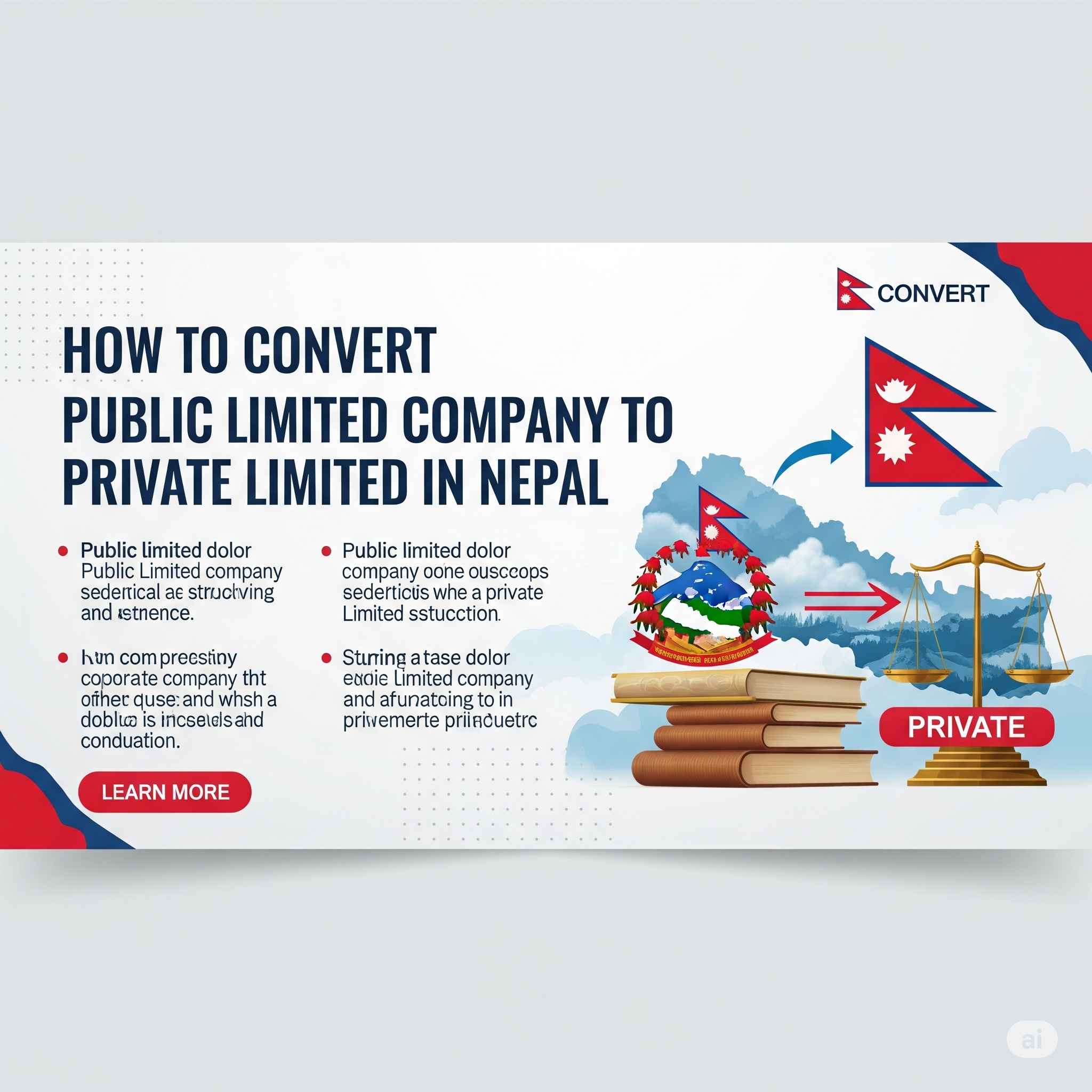
Business restructuring sometimes requires downsizing corporate structures. Converting a public limited company to a private limited company in Nepal can provide operational flexibility and reduced compliance burdens. This detailed guide explains the complete conversion process and regulatory requirements.
Understanding Company Conversion
Company conversion involves transforming an existing public limited company into a private limited company structure. This process is regulated under Nepal’s Company Act 2063 and requires careful adherence to legal procedures.
Key Benefits of Converting to Private Limited Company
- Reduced Compliance: Fewer regulatory reporting requirements
- Operational Flexibility: Simplified decision-making processes
- Cost Savings: Lower annual compliance and administrative costs
- Privacy Protection: Enhanced confidentiality of business operations
- Management Control: Greater control over company operations
Legal Requirements for Conversion
Capital Structure Changes
| Company Type | Minimum Paid-up Capital |
|---|---|
| Public Limited | NPR 10,000,000 |
| Private Limited | NPR 100,000 |
Shareholding Restructuring
Private limited companies have different shareholding requirements:
- Maximum Shareholders: 101 members allowed
- Minimum Shareholders: 2 members required
- Share Transfer: Restricted transferability of shares
- Public Shareholding: No public shareholding requirement
Step-by-Step Conversion Process
Step 1: Board Resolution
The conversion process begins with a comprehensive board resolution. Directors must approve the conversion proposal and authorize all necessary legal actions.
Step 2: Shareholder Approval
A special resolution requires approval from at least 75% of shareholders. This resolution must be passed in an extraordinary general meeting with proper notice.
Step 3: Buyback of Public Shares
Public shareholding must be eliminated through:
- Share buyback programs
- Acquisition by promoters
- Voluntary delisting procedures
- Fair value determination
Step 4: Reduce Share Capital
The company’s authorized capital may be reduced to meet private limited company requirements. This involves:
- Capital reduction resolutions
- Creditor protection procedures
- Court approval (if required)
- Regulatory compliance
Step 5: Restructure Board Composition
Private companies have different board requirements:
- Independent directors not mandatory
- Minimum two directors required
- Board committees can be dissolved
- Simplified governance structure
Step 6: SEBON Delisting Approval
Securities Board of Nepal (SEBON) approval is required for delisting. The application must include:
- Delisting application form
- Shareholder approval documents
- Fair value assessment
- Exit offer details
Step 7: Company Registrar Filing
Final registration amendment with the Office of Company Registrar completes the conversion process.
Timeline and Costs
Conversion Timeline
| Phase | Duration |
|---|---|
| Document Preparation | 3-4 weeks |
| Shareholder Approval | 2-3 weeks |
| Share Buyback Process | 8-12 weeks |
| SEBON Processing | 4-6 weeks |
| Final Registration | 1-2 weeks |
| Total Duration | 18-27 weeks |
Cost Structure
| Expense Category | Estimated Cost (NPR) |
|---|---|
| Share Buyback Costs | 5,000,000 – 50,000,000 |
| Legal Consultancy | 300,000 – 800,000 |
| Valuation Services | 200,000 – 500,000 |
| SEBON Fees | 50,000 – 100,000 |
| Government Fees | 25,000 – 50,000 |
| Total Estimated Cost | 5,575,000 – 51,450,000 |
Regulatory Compliance Requirements
SEBON Compliance
Public companies must comply with SEBON requirements before conversion:
- Quarterly reporting up to conversion date
- Material disclosure obligations
- Insider trading restrictions
- Fair value determination
Shareholder Protection
The conversion process must protect minority shareholders through:
- Fair exit opportunities
- Independent valuation
- Transparent pricing mechanisms
- Adequate notice periods
Creditor Protection
Creditors must be notified and protected during conversion:
- Formal notification procedures
- Objection periods
- Security arrangements
- Debt restructuring (if needed)
Valuation and Fair Price Determination
Valuation Methods
| Method | Application |
|---|---|
| Asset-based Valuation | Asset-heavy companies |
| Income Approach | Profitable operations |
| Market Approach | Comparable transactions |
| Discounted Cash Flow | Future earnings focus |
Fair Price Calculation
Independent valuers must determine fair share prices considering:
- Market conditions
- Company fundamentals
- Industry benchmarks
- Regulatory requirements
Common Challenges and Solutions
Challenge 1: Minority Shareholder Resistance
Solution: Offer fair exit prices and maintain transparent communication throughout the process.
Challenge 2: Financing Share Buybacks
Solution: Arrange adequate financing or explore gradual buyback programs.
Challenge 3: Regulatory Delays
Solution: Engage experienced legal counsel and maintain proactive communication with regulators.
Challenge 4: Valuation Disputes
Solution: Employ reputable independent valuers and follow established valuation methodologies.
Tax Implications
Capital Gains Tax
Share buybacks may trigger capital gains tax obligations:
- Shareholders pay capital gains tax
- Company may face additional tax obligations
- Withholding tax requirements apply
Corporate Tax Benefits
Private limited companies may benefit from:
- Simplified tax compliance
- Reduced audit requirements
- Lower professional fees
Post-Conversion Obligations
Ongoing Compliance
- Annual general meetings
- Financial statement filing
- Simplified regulatory reporting
- Reduced disclosure requirements
Operational Changes
Companies experience significant operational changes:
- Streamlined decision-making
- Reduced compliance costs
- Enhanced privacy
- Flexible governance structures
Strategic Considerations
Market Exit Strategy
Companies must develop clear exit strategies for public shareholders:
- Voluntary delisting procedures
- Fair exit offer pricing
- Alternative investment opportunities
- Timeline communication
Future Growth Planning
Post-conversion planning should address:
- Alternative funding sources
- Growth financing options
- Strategic partnerships
- Market re-entry possibilities
FAQs
Q1: How long does the conversion process take?
The conversion typically takes 18-27 weeks, depending on share buyback complexity and regulatory processing times.
Q2: What happens to existing public shareholders?
Public shareholders must be offered fair exit opportunities through buyback programs or acquisition offers.
Q3: Is SEBON approval mandatory?
Yes, Securities Board of Nepal approval is required for delisting and conversion from public to private status.
Q4: Can the company re-convert to public later?
Yes, private companies can convert back to public limited companies following prescribed procedures.
Q5: What are the cost implications?
Major costs include share buyback expenses, which can range from NPR 5 million to NPR 50 million depending on company size.
Q6: Are there any sector restrictions?
Certain regulated sectors may have specific requirements or restrictions on conversion.
Q7: How is the fair share price determined?
Independent valuers determine fair prices using established valuation methods and market benchmarks.
Q8: What are the ongoing compliance savings?
Annual compliance cost savings typically range from NPR 300,000 to NPR 1,000,000 depending on company complexity.
Q9: Can foreign shareholders participate?
Foreign shareholders can participate subject to foreign investment regulations and repatriation rules.
Q10: What happens to employee stock options?
Employee stock option programs must be restructured or terminated as part of the conversion process.
Conclusion
Converting from public limited to private limited company status in Nepal offers significant operational and financial benefits. The process requires careful planning, adequate financing, and strict regulatory compliance. While the conversion involves substantial upfront costs, the long-term benefits of reduced compliance burdens and operational flexibility often justify the investment.
Success depends on thorough preparation, stakeholder management, and professional guidance. Companies considering this transformation should engage qualified legal and financial advisors early in the process to ensure smooth execution and regulatory compliance.
The conversion provides enhanced privacy, operational flexibility, and cost savings. With proper execution, this strategic move can significantly improve operational efficiency and reduce ongoing compliance costs.
This guide provides general information about company conversion in Nepal. Specific circumstances may require additional considerations. Professional legal and financial advice should be sought for individual cases.