
Hydropower FDI Nepal: Complete Investor Guide for Chinese, Indian & US Investors
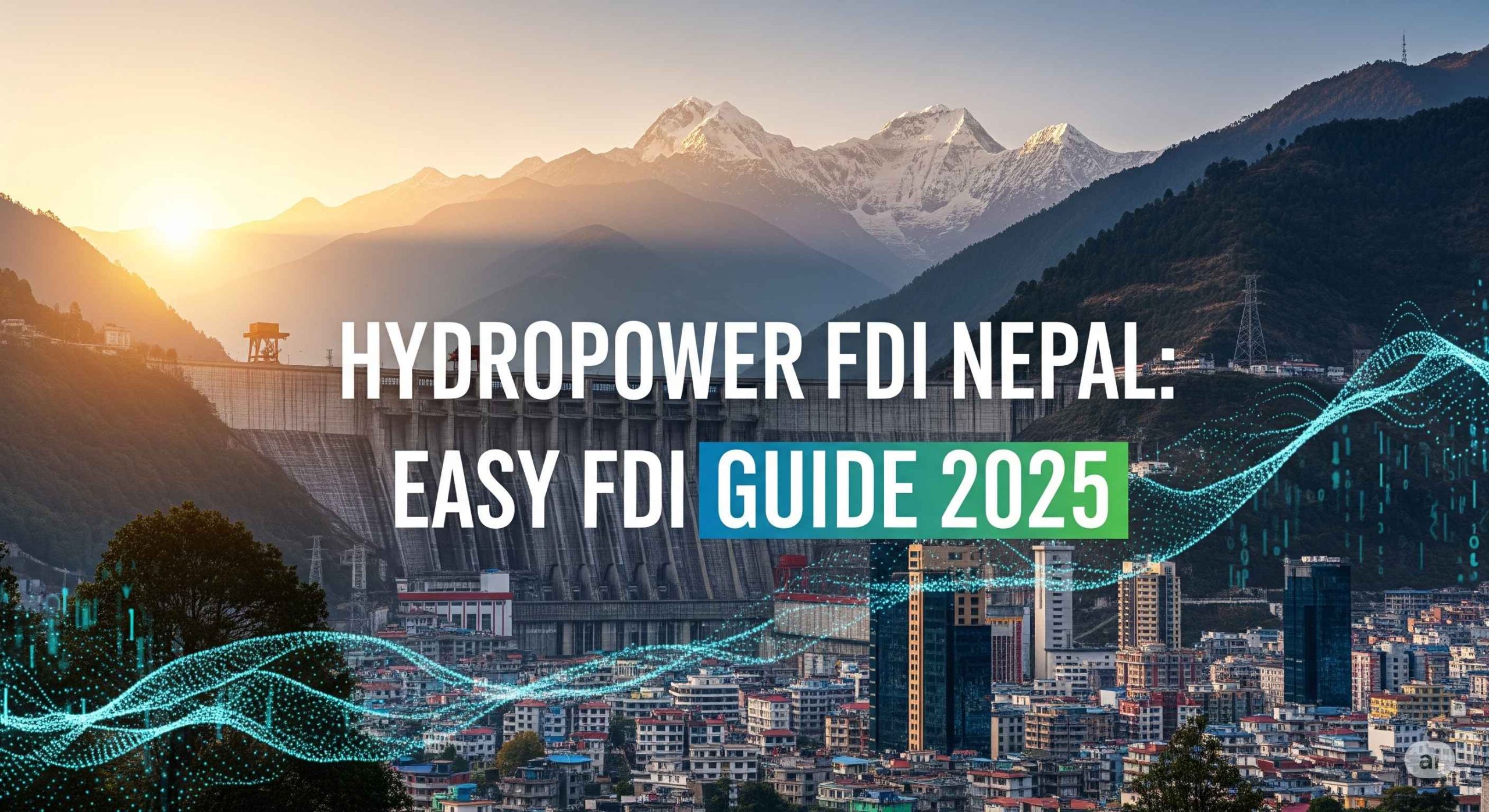
Hydropower FDI Nepal represents one of the most promising investment opportunities in South Asia, with Nepal’s estimated 40 GW of commercially viable hydropower potential waiting to be developed. As Nepal aims to generate 28.5 GW by 2035 for domestic consumption and export to India and Bangladesh, international investors from China, India, and the United States are increasingly looking at hydropower FDI Nepal as a strategic investment destination. This comprehensive guide addresses the specific needs of investors from these three key markets while providing valuable insights for Nepali legal professionals and government officials involved in energy policy and foreign investment regulation.
What is Hydropower FDI in Nepal?
Hydropower FDI Nepal refers to foreign direct investment in Nepal’s hydroelectric power sector, which allows 100% foreign ownership under the Foreign Investment and Technology Transfer Act (FITTA) 2019. The sector has become Nepal’s primary attraction for foreign investment, accounting for 40-45% of total FDI inflows. For international investors, hydropower FDI Nepal offers unique advantages including access to Nepal’s vast water resources, potential for electricity export to energy-hungry neighboring markets, and government incentives designed to attract foreign capital.
The hydropower FDI Nepal landscape is governed by a sophisticated legal framework that includes FITTA 2019, the Public-Private Partnership and Investment Act 2019, and the Electricity Act 1992. These laws provide the foundation for foreign investors seeking to participate in Nepal’s ambitious hydropower development plans while ensuring regulatory compliance and investment protection.
Education Consultancy Registration in Nepal
Investment Opportunities in Nepal’s Hydropower Sector
Where are the Investment Opportunities in Nepal?
Nepal’s hydropower FDI Nepal opportunities span across project sizes and development stages, offering diverse entry points for international investors:
Table 1: Hydropower Project Categories and Investment Opportunities
| Project Category | Capacity Range | Investment Required | Approval Authority | Suitable For |
|---|---|---|---|---|
| Small Hydro | < 10 MW | $5-20 million | DOI | Small investors, first-time entrants |
| Medium Hydro | 10-200 MW | $20-400 million | DOI | Mid-sized companies, experienced investors |
| Large Hydro | 200-500 MW | $400 million – $1 billion | DOI/IBN | Large corporations, institutional investors |
| Mega Hydro | > 500 MW | > $1 billion | IBN | Major utilities, government-backed entities |
The hydropower FDI Nepal market offers particular opportunities in:
- Run-of-river projects (environmentally preferred)
- Storage projects for peak load management
- Cross-border transmission infrastructure
- Technology transfer and equipment supply
- Operation and maintenance services
Legal Framework for Hydropower FDI Nepal
Key Legislation Governing Hydropower FDI Nepal
The hydropower FDI Nepal sector operates under a comprehensive legal framework designed to facilitate foreign investment while ensuring regulatory compliance:
Table 2: Primary Laws Governing Hydropower FDI Nepal
| Law/Act | Year | Key Provisions | Relevance to Foreign Investors |
|---|---|---|---|
| Foreign Investment and Technology Transfer Act (FITTA) | 2019 | 100% FDI allowed, 7-day approval timeline, national treatment | Foundation for all foreign investment |
| Public-Private Partnership and Investment Act | 2019 | PPP framework, risk allocation, government guarantees | Large project structuring |
| Electricity Act | 1992 | Power purchase agreements, licensing, tariff determination | Revenue security mechanisms |
| Industrial Enterprises Act | 2016 | Tax incentives, environmental clearance, land acquisition | Operational compliance |
| Foreign Exchange (Regulation) Act | 1962 | Profit repatriation, currency conversion | Financial operations |
Investment Approval Process for Hydropower FDI Nepal
The hydropower FDI Nepal approval process varies based on investment size and project scale:
- Projects up to NPR 500 million (USD 3.75 million): Automatic approval through Single Window Service Center
- Projects NPR 500 million to NPR 6 billion (USD 46 million): Department of Industry (DOI) approval
- Projects above NPR 6 billion or >200 MW capacity: Investment Board of Nepal (IBN) approval
The hydropower FDI Nepal process typically takes 12-24 months to complete, encompassing environmental clearances, land acquisition, financing arrangements, and power purchase agreements.
Country-Specific Investment Procedures
Chinese Investors in Hydropower FDI Nepal
Chinese investors represent the largest source of hydropower FDI Nepal, accounting for over 60% of total pledged investment. Chinese companies benefit from the Belt and Road Initiative (BRI) framework and preferential access to Chinese financing.
Key Advantages for Chinese Investors:
- BRI project prioritization
- Access to Chinese state financing (Exim Bank, China Development Bank)
- Technology transfer synergies
- Established diplomatic channels
Investment Procedures for Chinese Investors:
- Project Identification: Through China-Nepal Joint Mechanism
- Feasibility Study: Often conducted by Chinese engineering firms
- Financing Arrangement: Chinese state banks provide preferential terms
- Government Approval: Streamlined through BRI framework
- Implementation: Chinese EPC contractors typically handle construction
Bilateral Agreements Supporting Chinese Investment:
- Belt and Road Initiative MOU (2017)
- Economic and Technical Cooperation Agreements (2016, 2017, 2018)
- Double Taxation Avoidance Agreement
Table 3: Chinese Hydropower FDI Nepal Projects
| Project Name | Capacity | Investment | Chinese Company | Status |
|---|---|---|---|---|
| Upper Tamakoshi | 456 MW | $500 million | China Hydropower International | Operational |
| Lower Manang Marsyangdi | 120 MW | $280 million | QYEC China | Under Construction |
| Tamakoshi III | 200 MW | $500 million | Joint Chinese-Nepali | Planning |
Indian Investors in Hydropower FDI Nepal
Indian investors in hydropower FDI Nepal benefit from geographical proximity, cultural similarities, and robust cross-border power trade agreements. India represents Nepal’s primary electricity export market.
Key Advantages for Indian Investors:
- Cross-border power trade agreements
- Geographical proximity reducing transmission costs
- Cultural and linguistic similarities
- Established business networks
Investment Procedures for Indian Investors:
- Project Selection: Through India-Nepal Power Exchange
- Regulatory Approval: DOI or IBN based on project size
- Power Purchase Agreement: With Nepal Electricity Authority or Indian utilities
- Financing: Indian banks and financial institutions
- Implementation: Often with Indian EPC partners
Bilateral Agreements Supporting Indian Investment:
- India-Nepal Power Trade Agreement (2014, updated 2024)
- Bilateral Investment Promotion and Protection Agreement (BIPPA 2011)
- 10,000 MW electricity export agreement (2024)
Table 4: Indian Hydropower FDI Nepal Opportunities
| Opportunity Type | Capacity Range | Investment Timeline | Return Mechanism |
|---|---|---|---|
| Export-oriented projects | >100 MW | 5-7 years | Power sales to India |
| Domestic supply projects | 50-200 MW | 4-6 years | PPA with NEA |
| Transmission projects | Varies | 3-5 years | Wheeling charges |
| Technology supply | Varies | 1-3 years | Equipment sales |
US Investors in Hydropower FDI Nepal
US investors in hydropower FDI Nepal represent a smaller but growing segment, focusing on larger projects with international financing and environmental standards.
Key Advantages for US Investors:
- Access to international financing institutions
- Environmental and governance standards
- Technology leadership in large hydro
- Millennium Challenge Corporation support
Investment Procedures for US Investors:
- Project Development: International feasibility standards
- Environmental Compliance: Higher ESG requirements
- Financing: IFC, World Bank, US EXIM Bank
- Risk Mitigation: Political risk insurance available
- Implementation: International EPC contractors
Bilateral Considerations for US Investors:
- No bilateral investment treaty (creates higher risk perception)
- Millennium Challenge Corporation Compact ($500 million for transmission)
- OPIC (now DFC) political risk insurance available
- US represents 3.2% of total FDI stock in Nepal
Table 5: US Hydropower FDI Nepal Risk-Reward Profile
| Factor | Risk Level | Mitigation Strategy | Reward Potential |
|---|---|---|---|
| Political Risk | Medium | Political risk insurance | High returns |
| Regulatory Risk | Medium | Local partnerships | Market leadership |
| Currency Risk | High | Hedging mechanisms | Dollar-denominated returns |
| Environmental Risk | Low | International standards | ESG premium |
Regulatory Requirements by Investor Nationality
Comparative Analysis of Investment Requirements
Table 6: Country-Specific Requirements for Hydropower FDI Nepal
| Requirement | Chinese Investors | Indian Investors | US Investors |
|---|---|---|---|
| Minimum Investment | NPR 20 million | NPR 20 million | NPR 20 million |
| Local Partner Required | No | No | No |
| Technology Transfer | Mandatory | Preferred | Voluntary |
| Environmental Standards | Nepali + Chinese | Nepali + Indian | International (IFC) |
| Financing Access | Chinese state banks | Indian banks + IFIs | International markets |
| Repatriation Timeline | 15 days | 15 days | 15 days |
| Dispute Resolution | Nepali courts | BIPPA arbitration | International arbitration |
Financial Incentives and Fiscal Benefits
Tax Incentives for Hydropower FDI Nepal
The hydropower FDI Nepal sector offers substantial fiscal incentives designed to attract foreign investment:
Table 7: Fiscal Incentives for Hydropower FDI Nepal
| Incentive Type | Benefit | Applicability | Duration |
|---|---|---|---|
| Income Tax Holiday | 0% tax | Projects >50 MW | 10 years |
| Reduced Income Tax | 15% (vs 25%) | All hydropower projects | Post-holiday period |
| Customs Duty Exemption | 0% duty | Import of equipment | Project lifetime |
| VAT Refund | Full refund | Construction materials | Project period |
| Royalty Holiday | 0% royalty | First 15 years | Large projects |
| Carbon Credit | Additional revenue | Clean projects | Project lifetime |
Risk Management and Mitigation Strategies
Common Risks in Hydropower FDI Nepal
Investors in hydropower FDI Nepal must navigate several key risks:
Political and Regulatory Risks:
- Policy inconsistency between governments
- Bureaucratic delays in approvals
- Changes in tax and incentive structures
- Local opposition to foreign projects
Financial Risks:
- Currency fluctuation (NPR/USD/INR/CNY)
- Interest rate volatility
- Cost overruns in construction
- Power purchase agreement renegotiation
Operational Risks:
- Construction delays due to terrain challenges
- Environmental compliance issues
- Local community relations
- Equipment and technology failures
Risk Mitigation Strategies for Each Investor Group
Chinese Investors:
- Government-to-government agreements
- State-backed financing guarantees
- Long-term strategic partnerships
- Technology integration benefits
Indian Investors:
- Cross-border power purchase agreements
- Geographic proximity advantages
- Cultural and linguistic alignment
- Established business networks
US Investors:
- Political risk insurance (DFC/OPIC)
- International arbitration clauses
- Environmental and governance standards
- Multilateral development bank partnerships
Environmental and Social Considerations
Environmental Compliance for Hydropower FDI Nepal
Environmental considerations are crucial for hydropower FDI Nepal projects, with requirements varying by investor nationality and project scale:
Environmental Assessment Requirements:
- Initial Environmental Examination (IEE): Projects <50 MW
- Environmental Impact Assessment (EIA): Projects >50 MW
- Strategic Environmental Assessment: Mega projects and cascades
Table 8: Environmental Standards by Investor Nationality
| Standard | Chinese Investors | Indian Investors | US Investors |
|---|---|---|---|
| Local Requirements | Mandatory | Mandatory | Mandatory |
| Home Country Standards | Chinese standards | Indian standards | IFC Performance Standards |
| International Standards | Optional | Recommended | Mandatory |
| Climate Risk Assessment | Basic | Moderate | Comprehensive |
| Biodiversity Protection | Standard | Enhanced | World Bank standards |
Technical Aspects of Hydropower Development
Project Development Timeline for Hydropower FDI Nepal
The typical hydropower FDI Nepal project development timeline spans 5-8 years from conception to commercial operation:
Phase 1: Feasibility and Planning (12-18 months)
- Site identification and reconnaissance
- Hydrological and geological studies
- Environmental and social impact assessment
- Financial modeling and feasibility analysis
- Preliminary design and cost estimation
Phase 2: Regulatory Approvals (12-24 months)
- Investment approval from DOI/IBN
- Environmental clearance
- Land acquisition and rights-of-way
- Power purchase agreement negotiation
- Financing arrangement and closing
Phase 3: Construction (36-60 months)
- Civil works (dam, powerhouse, tunnels)
- Electromechanical equipment installation
- Transmission line construction
- Commissioning and testing
Phase 4: Commercial Operation (Ongoing)
- Power generation and sales
- Operation and maintenance
- Monitoring and compliance
- Community development programs
Future Outlook and Trends
Emerging Trends in Hydropower FDI Nepal
The hydropower FDI Nepal sector is evolving rapidly, with several key trends shaping future investment opportunities:
Market Integration Trends:
- Regional power market development (BBIN corridor)
- Cross-border electricity trading mechanisms
- Renewable energy certificate systems
- Carbon credit market integration
Technology Trends:
- Smart grid integration
- Pumped storage development
- Digital monitoring and control systems
- Climate-resilient design standards
Policy Trends:
- Streamlined approval processes
- Enhanced environmental safeguards
- Community benefit sharing mechanisms
- Private sector participation models
Actionable Insights for Stakeholders
For International Investors
Chinese Investors:
- Leverage BRI framework for project prioritization
- Focus on large-scale projects with export potential
- Establish long-term partnerships with Nepali entities
- Integrate technology transfer components
Indian Investors:
- Target cross-border transmission projects
- Utilize existing power trade agreements
- Focus on projects with shorter development timelines
- Develop integrated energy solutions
US Investors:
- Target projects requiring international financing
- Focus on environmental and governance standards
- Develop innovative financing structures
- Leverage multilateral development bank relationships
For Nepali Legal Professionals
Key Areas of Focus:
- Structuring compliant FDI arrangements
- Negotiating power purchase agreements
- Managing cross-border regulatory compliance
- Handling dispute resolution mechanisms
Best Practices:
- Stay updated on FITTA and related regulations
- Develop expertise in international arbitration
- Build networks with foreign legal counsel
- Specialize in energy sector regulations
For Government Officials
Policy Development Priorities:
- Streamline approval processes for foreign investment
- Enhance transparency in regulatory decision-making
- Develop standardized power purchase agreements
- Create investor-friendly dispute resolution mechanisms
Implementation Strategies:
- Strengthen institutional capacity at DOI and IBN
- Develop one-stop service centers for investors
- Create predictable policy frameworks
- Enhance international cooperation on energy trade
Conclusion
Hydropower FDI Nepal presents a unique opportunity for international investors from China, India, and the United States to participate in Nepal’s ambitious energy development plans while contributing to regional economic integration. The sector offers substantial returns, supported by comprehensive legal frameworks, attractive fiscal incentives, and growing regional energy markets.
Success in hydropower FDI Nepal requires understanding the specific requirements and advantages available to each investor nationality, navigating complex regulatory processes, and implementing effective risk mitigation strategies. For Nepali legal professionals and government officials, creating an enabling environment for foreign investment while ensuring environmental sustainability and equitable benefit sharing represents the key to unlocking Nepal’s vast hydropower potential.
As Nepal continues to develop its hydropower resources and integrate into regional energy markets, hydropower FDI Nepal will remain a critical component of the country’s economic development strategy, offering opportunities for sustainable growth, regional cooperation, and clean energy development.