Introduction
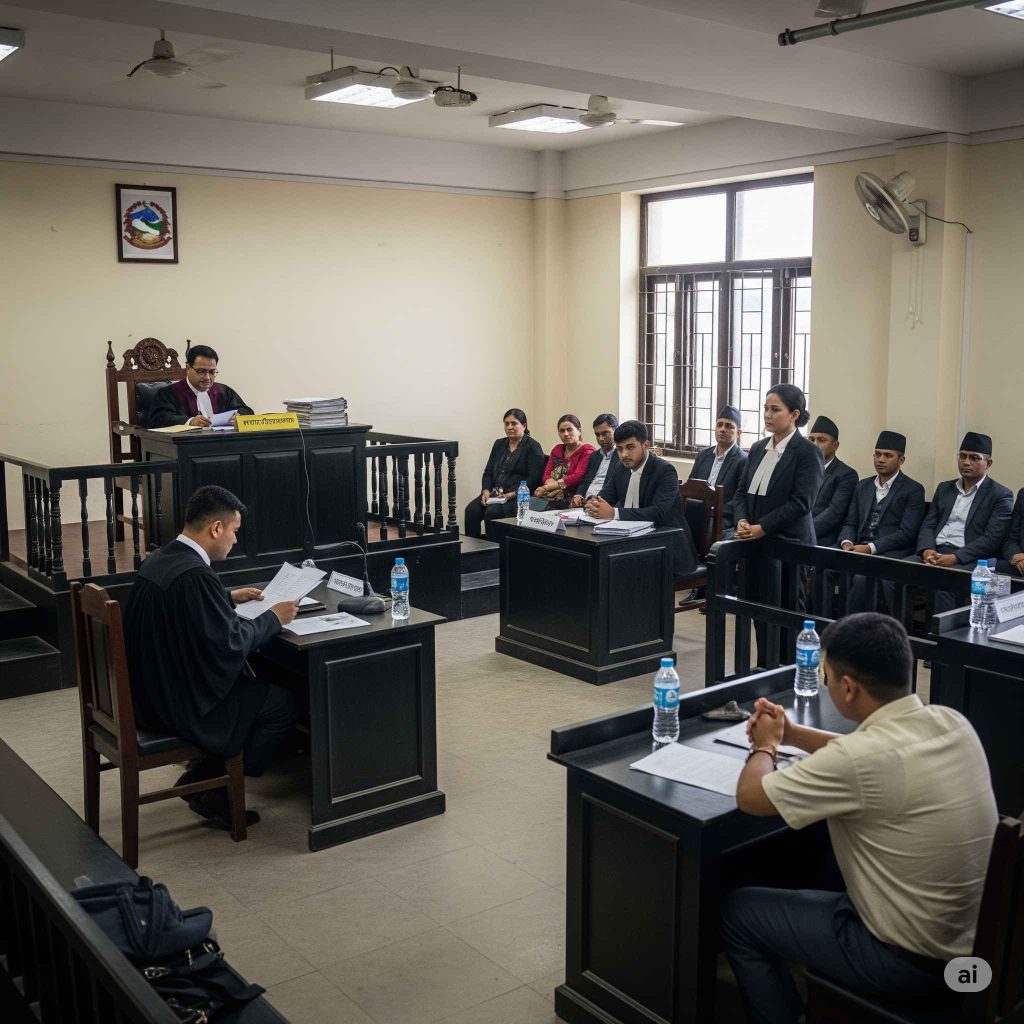
The criminal prosecution process in Nepal operates under a comprehensive legal framework established by the Criminal Procedure Code 2074 (2017), which works in conjunction with the Muluki Criminal Code 2074. This modern procedural framework replaced the traditional system and introduced standardized procedures that align with constitutional principles and international standards while ensuring due process rights for all parties involved.
Understanding the criminal prosecution process is crucial for legal practitioners, law enforcement agencies, and citizens alike. The process involves multiple stages, from initial complaint to final judgment, each governed by specific legal provisions and procedural safeguards designed to ensure justice while protecting fundamental rights.
Key Institutions in Criminal Prosecution
Office of the Attorney General (OAG)
The Office of the Attorney General serves as the apex prosecution authority in Nepal, responsible for overseeing the prosecution of criminal cases throughout the country. The Attorney General has been instrumental in leading the prosecution system to effectively implement the newly enacted Criminal Codes, ensuring uniform application of criminal law across all jurisdictions.
The OAG operates through a hierarchical structure with government attorneys stationed at various levels, from district courts to the Supreme Court. These attorneys have the authority to make prosecutorial decisions, including whether to file charges, what charges to pursue, and how to conduct the prosecution.
Police and Investigating Agencies
The Nepal Police serves as the primary investigating agency for criminal offenses, with specialized units handling specific types of crimes such as cybercrime, financial crimes, and organized crime. The investigating authority has custody of exhibits, evidence connected with the offense and the accused, and must produce them before the concerned court when ordered by the government attorney.
Other specialized agencies include the Department of Money Laundering Investigation, Central Investigation Bureau, and various regulatory bodies with investigative powers in their respective domains.
Stages of Criminal Prosecution Process
1. Initial Complaint and Registration
The criminal prosecution process typically begins with the filing of a complaint, which can be submitted by:
- The victim or their legal representative
- Police officers who observe criminal activity
- Government agencies in their official capacity
- Any person with knowledge of a criminal offense
First Information Report (FIR): When a complaint is received, police must register a First Information Report if the complaint discloses a cognizable offense. The FIR must include:
- Details of the alleged offense
- Identity of the complainant and accused (if known)
- Time, place, and circumstances of the incident
- Initial evidence or witnesses
Preliminary Inquiry: For non-cognizable offenses or cases requiring preliminary assessment, police may conduct a preliminary inquiry to determine whether a formal investigation is warranted.
2. Investigation Phase
The investigation phase is crucial for gathering evidence and establishing the facts of the case. This phase includes:
Evidence Collection:
- Physical evidence from the crime scene
- Documentary evidence relevant to the case
- Digital evidence, including electronic communications and data
- Forensic evidence through scientific examination
Witness Examination:
- Recording statements of witnesses
- Conducting identification procedures
- Ensuring witness protection when necessary
- Maintaining the chain of custody for evidence
Arrest and Detention:
- Arrests must be made in accordance with constitutional provisions
- The accused must be informed of the grounds for arrest
- Detention periods are strictly regulated by law
- Bail provisions apply according to the nature of the offense
Investigation Report: Upon completion of the investigation, the investigating officer must prepare a comprehensive report that includes:
- Summary of evidence collected
- Statements of witnesses
- Analysis of physical and documentary evidence
- Conclusion regarding the commission of the offense
- Recommendation for prosecution or closure
3. Prosecution Decision
The government attorney reviews the investigation report and decides whether to proceed with prosecution. This decision considers:
- Sufficiency of evidence to prove the offense beyond reasonable doubt
- Legal requirements for the specific offense
- Public interest considerations
- Availability of witnesses and evidence
Charge Sheet Filing: If the decision is to prosecute, the government attorney files a charge sheet (also known as a charge frame) with the appropriate court. The charge sheet must specify:
- The specific offense(s) charged
- Legal provisions under which charges are filed
- Summary of evidence supporting the charges
- List of witnesses to be examined
- Exhibits to be presented
4. Pre-Trial Proceedings
Court Jurisdiction: The case is filed in the court with appropriate jurisdiction based on:
- Territorial jurisdiction (where the offense occurred)
- Subject matter jurisdiction (based on the severity of the offense)
- Pecuniary jurisdiction (for cases involving financial matters)
Preliminary Hearing: The court conducts a preliminary hearing to:
- Verify the charges filed
- Ensure proper jurisdiction
- Address any preliminary objections
- Set the trial schedule
Bail Proceedings: The accused may apply for bail, and the court considers:
- Nature and gravity of the offense
- Evidence against the accused
- Risk of flight or tampering with evidence
- Previous criminal record
- Likelihood of committing further offenses
5. Trial Proceedings
Charge Reading: The court formally reads the charges to the accused and ensures they understand the allegations against them.
Plea Taking: The accused is asked to enter a plea:
- Guilty plea: Leads to conviction and sentencing
- Not guilty plea: Proceeds to full trial
- No plea: Treated as not guilty plea
Prosecution Case: The prosecution presents its case by:
- Examining prosecution witnesses
- Presenting physical and documentary evidence
- Establishing the elements of the offense
- Proving guilt beyond reasonable doubt
Defense Case: After the prosecution case is closed, the defense may:
- Examine defense witnesses
- Present evidence in favor of the accused
- Challenge the prosecution’s evidence
- Argue for acquittal or lesser charges
Cross-Examination: Both sides have the right to cross-examine witnesses presented by the other party.
Final Arguments: Both prosecution and defense present their final arguments, summarizing their case and the evidence presented.
6. Judgment and Sentencing
Judgment: The court renders its judgment based on:
- Evaluation of all evidence presented
- Credibility of witnesses
- Legal standards for the specific offense
- Constitutional and procedural requirements
Sentencing: If the accused is found guilty, the court imposes an appropriate sentence considering:
- Severity of the offense
- Prescribed punishment under the law
- Mitigating and aggravating circumstances
- Previous criminal record
- Impact on the victim and society
Victim Compensation: Under the Criminal Code (Offence and Punishment) Act, 2074, not only is punishment given to offenders, but victims are also provided with certain compensation as per the relevant law of Nepal.
Appeal Process
Right to Appeal
Both the prosecution and defense have the right to appeal adverse decisions to higher courts:
Appellate Court: Appeals from district courts go to the High Court Supreme Court: Final appeals go to the Supreme Court on points of law
Grounds for Appeal:
- Errors in law or procedure
- Insufficient evidence to support conviction
- Excessive or inadequate sentencing
- Violation of constitutional rights
Appeal Procedure
Filing: Appeals must be filed within the prescribed time limits Grounds: Specific grounds for appeal must be stated Record: Complete trial record is transmitted to the appellate court Hearing: Appellate court may conduct hearings or decide based on the record
Special Procedures
Plea Bargaining
The Criminal Procedure Code provides for plea bargaining in appropriate cases, allowing:
- Negotiated guilty pleas
- Reduced charges or sentences
- Expedited case resolution
- Victim compensation agreements
Summary Trials
For minor offenses, summary trial procedures allow for:
- Simplified procedural requirements
- Faster case resolution
- Lower procedural costs
- Immediate sentencing
Juvenile Justice
Special procedures apply to cases involving minors:
- Specialized juvenile courts
- Emphasis on rehabilitation over punishment
- Parental involvement in proceedings
- Confidentiality protections
Procedural Safeguards and Rights
Rights of the Accused
Fundamental Rights:
- Right to legal representation
- Right to remain silent
- Right to be informed of charges
- Right to examine witnesses
- Right to present evidence and arguments
- Right to appeal
Due Process Protections:
- Presumption of innocence
- Burden of proof on prosecution
- Right to fair and speedy trial
- Protection against self-incrimination
- Right to interpreter services
Witness Protection
Witness Rights and Protections:
- Right to legal assistance
- Protection from intimidation
- Confidentiality measures when appropriate
- Support services for vulnerable witnesses
Victim Rights
Victim Participation:
- Right to be informed of proceedings
- Right to legal representation
- Right to compensation
- Right to participate in plea negotiations
Challenges and Reforms
Current Challenges
Capacity Building: Ongoing efforts to strengthen criminal justice mechanisms through high-level consultations with key stakeholders to identify legal and policy challenges regarding access to justice demonstrate the continued focus on improving the system.
Access to Justice: Geographic barriers, language differences, and economic constraints continue to affect equal access to justice for all citizens.
Case Backlog: Courts face significant backlogs that affect the timely resolution of criminal cases.
Ongoing Reforms
Technological Integration: Implementation of electronic case management systems and digital procedures to improve efficiency.
Training and Capacity Building: Ongoing training programs for judges, prosecutors, and law enforcement personnel.
Alternative Dispute Resolution: Expansion of mediation and other alternative mechanisms for appropriate cases.
Practical Considerations for Legal Practitioners
Case Preparation
Investigation Coordination: Lawyers must work closely with investigating agencies to ensure proper evidence collection and witness preparation.
Legal Research: Thorough understanding of relevant statutory provisions and recent case law is essential.
Client Counseling: Comprehensive explanation of the process, rights, and potential outcomes to clients.
Court Procedures
Procedural Compliance: Strict adherence to procedural requirements and deadlines is crucial for effective representation.
Evidence Presentation: Proper presentation of evidence and examination of witnesses requires careful preparation and skill.
Sentencing Advocacy: Effective advocacy during sentencing phase to ensure appropriate punishment consideration.
Conclusion
The criminal prosecution process in Nepal under the Criminal Procedure Code 2074 represents a significant advancement in ensuring due process while maintaining effective law enforcement. The comprehensive framework balances the need for public safety with the protection of individual rights, creating a system that serves both justice and the rule of law.
Success in navigating this process requires thorough understanding of the legal framework, careful attention to procedural requirements, and commitment to the principles of justice. As the system continues to evolve through implementation experience and ongoing reforms, legal practitioners must stay informed of developments and contribute to the effective functioning of Nepal’s criminal justice system.
The emphasis on victim rights, procedural safeguards, and fair trial guarantees reflects Nepal’s commitment to creating a modern, effective criminal justice system that serves all citizens equally. Through continued improvement and proper implementation, this framework can fulfill its promise of delivering justice while protecting fundamental rights.
Note: This guide provides general information about the criminal prosecution process in Nepal. Specific cases may involve additional considerations, and legal practitioners should always consult current statutory provisions and recent case law for the most up-to-date requirements and procedures.